
IUI vs IVF: Which Fertility Treatment Is Right for You?
If you're exploring fertility treatment options, you've likely come across both IUI and IVF. Understanding the differences between these treatments, and when each might be appropriate, can help you have informed discussions with your fertility specialist.
What Is IUI?
Intrauterine insemination (IUI) is a relatively simple procedure where prepared sperm is placed directly into the uterus around the time of ovulation. The goal is to increase the number of sperm that reach the fallopian tubes, improving the chances of fertilisation.
IUI can be performed during a natural cycle (timed to your natural ovulation) or combined with ovulation induction medications to stimulate egg development. The procedure itself takes only a few minutes and is similar to having a Pap smear.
This treatment is less invasive than IVF and doesn't require egg collection or embryo transfer. Fertilisation occurs naturally within the body, in the fallopian tubes.
What Is IVF?
In vitro fertilisation (IVF) is a more involved process where eggs are collected from the ovaries, fertilised with sperm in a laboratory, and resulting embryos are transferred back to the uterus.
IVF typically involves hormone injections to stimulate the ovaries to produce multiple eggs, regular monitoring through blood tests and ultrasounds, an egg collection procedure under sedation, and embryo transfer a few days later.
Because fertilisation occurs outside the body, IVF can overcome problems that IUI cannot address, such as blocked fallopian tubes or severe sperm abnormalities.
IUI vs IVF: Key Differences
| Factor | IUI | IVF |
|---|---|---|
| Procedure complexity | Simple, office-based | More complex, involves surgery |
| Where fertilisation occurs | In the body (fallopian tubes) | In the laboratory |
| Requires healthy tubes | Yes, at least one open tube | No |
| Medications | Optional (oral or none) | Injectable hormones required |
| Success rate per cycle | 10 to 20% (varies with age) | 30 to 50% (varies with age) |
| Cost per cycle | Lower | Higher |
| Time commitment | Minimal monitoring | Frequent appointments over 2 to 3 weeks |
When Might IUI Be Recommended?
IUI may be a suitable first-line treatment for:
- Unexplained infertility in younger couples with open fallopian tubes
- Mild male factor where sperm counts are reduced but not severely
- Cervical factor issues where the cervix may be preventing sperm from entering the uterus
- Ovulation disorders combined with ovulation induction
- Donor sperm insemination for single women or same-sex couples
Generally, 3 to 6 IUI cycles may be attempted before considering IVF, depending on individual circumstances.
When Might IVF Be Recommended?
IVF may be the more appropriate option when:
- Fallopian tubes are blocked or damaged, IVF bypasses the tubes entirely
- Severe male factor infertility, ICSI (a type of IVF) can achieve fertilisation with very few sperm
- Advanced maternal age, IVF offers higher success rates when time is a factor
- Previous IUI cycles have been unsuccessful
- Genetic testing is needed, preimplantation genetic testing is only possible with IVF
- Egg or embryo freezing is desired
Making the Decision
The choice between IUI and IVF depends on multiple factors:
- Your age and fertility assessment results
- The underlying cause of infertility
- How long you've been trying to conceive
- Previous treatment history
- Personal preferences regarding treatment intensity
- Financial considerations
Sometimes starting with IUI makes sense as a less invasive first step. In other situations, proceeding directly to IVF may be more appropriate to maximise your chances without losing valuable time.
Your fertility specialist will consider your complete picture and recommend the approach most likely to help you achieve your goal of pregnancy.
Frequently Asked Questions
If you're considering fertility treatment and would like to understand which approach might be right for your situation, a consultation can help clarify your options.
Book a Consultation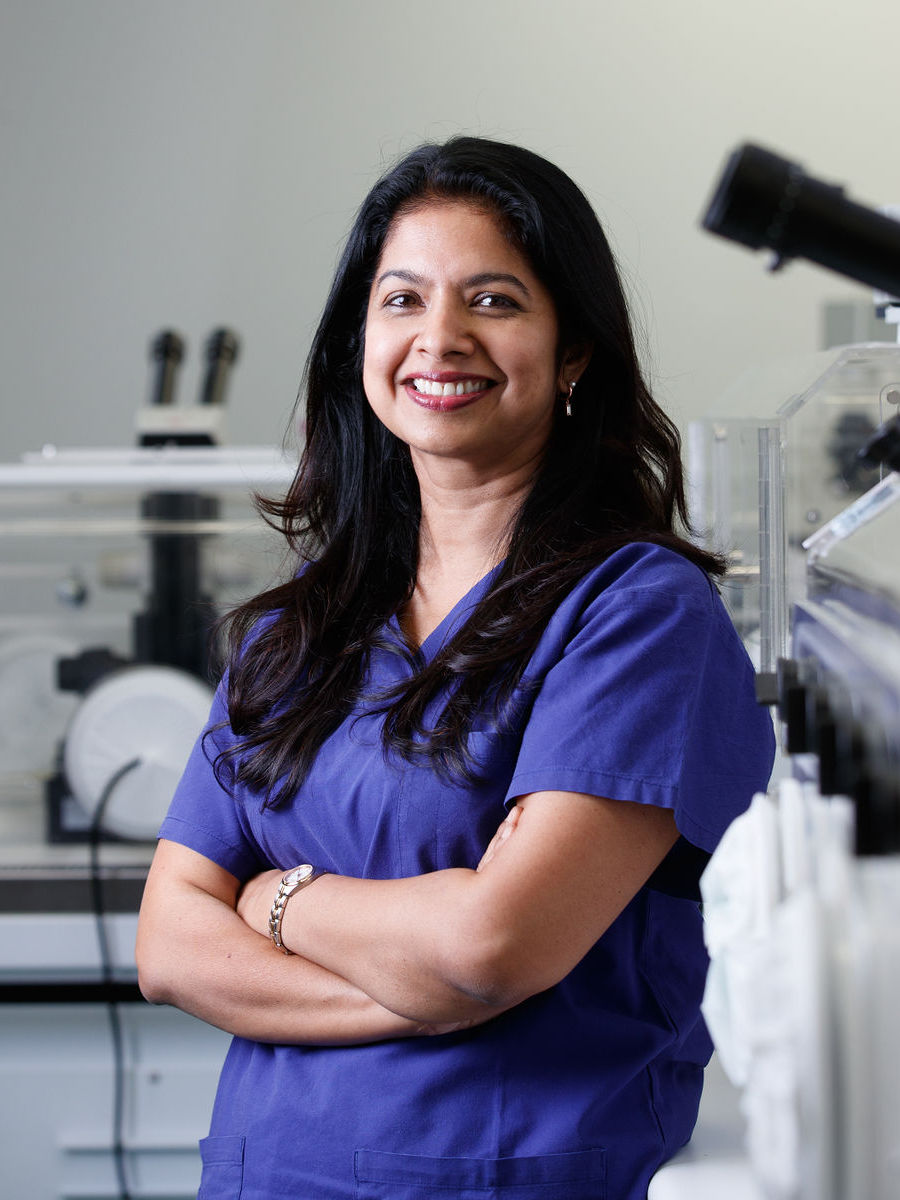
All content on this page has been reviewed and verified by Dr Priya Sivadas for factual accuracy and clinical correctness.
- FRANZCOG — Fellow of RANZCOG
- CREI — Certified Reproductive Endocrinology & Infertility
- MMed (Rep Med) — Master of Reproductive Medicine, UNSW
- MBBS — Bachelor of Medicine & Surgery
- DGO — Diploma in Gynaecology & Obstetrics
- MD — Doctor of Medicine (O&G)